Introduction
In the 2000 book Bowling Alone, sociologist Robert D. Putnam explores the relationship between communal activities like bowling and churchgoing with the civic and personal health across American communities.
Bowling Alone traces a behavioural arc from the decimation of shared activities to an explanation of over time heightened disunity. Like a poorly maintained marriage that looks okay until fractured beyond retrieval, Putnam argues the root causes of a suppressed American people lay much earlier than the polling booth, and in something far more mundane. Mundanity, and its maintenance, was worthy of attention for a guy like Putnam.
The attrition of bowling alleys thus represented more than being able to get a strike. If the 2026 equivalent was titled Scrolling Alone, it doesn’t take much imagination to see how gains in content are leading to other losses. Less small talk. Less low stakes conversation. Less spontaneous make out sessions (the bedrock of democracy…?).
Ray Oldenburg (a second sociologist starting with ‘R’) saw “third spaces” as places we inhabit beyond home and work — informal public gathering places that function as the “fundamental institutions of mediation between the individual and larger society”. Liminal places are important for vibing with one another, but like Putnam’s bowling alleys, they require energy, time, and investment.
Luckily, for Freya Berwick of Sense of Self, Nicolette Preketes-Tardiani of Third Space, and Mark ‘Z’ Zmarzly of STARTUP BALL, questions of how to nurture modern day “third spaces” are top of mind.
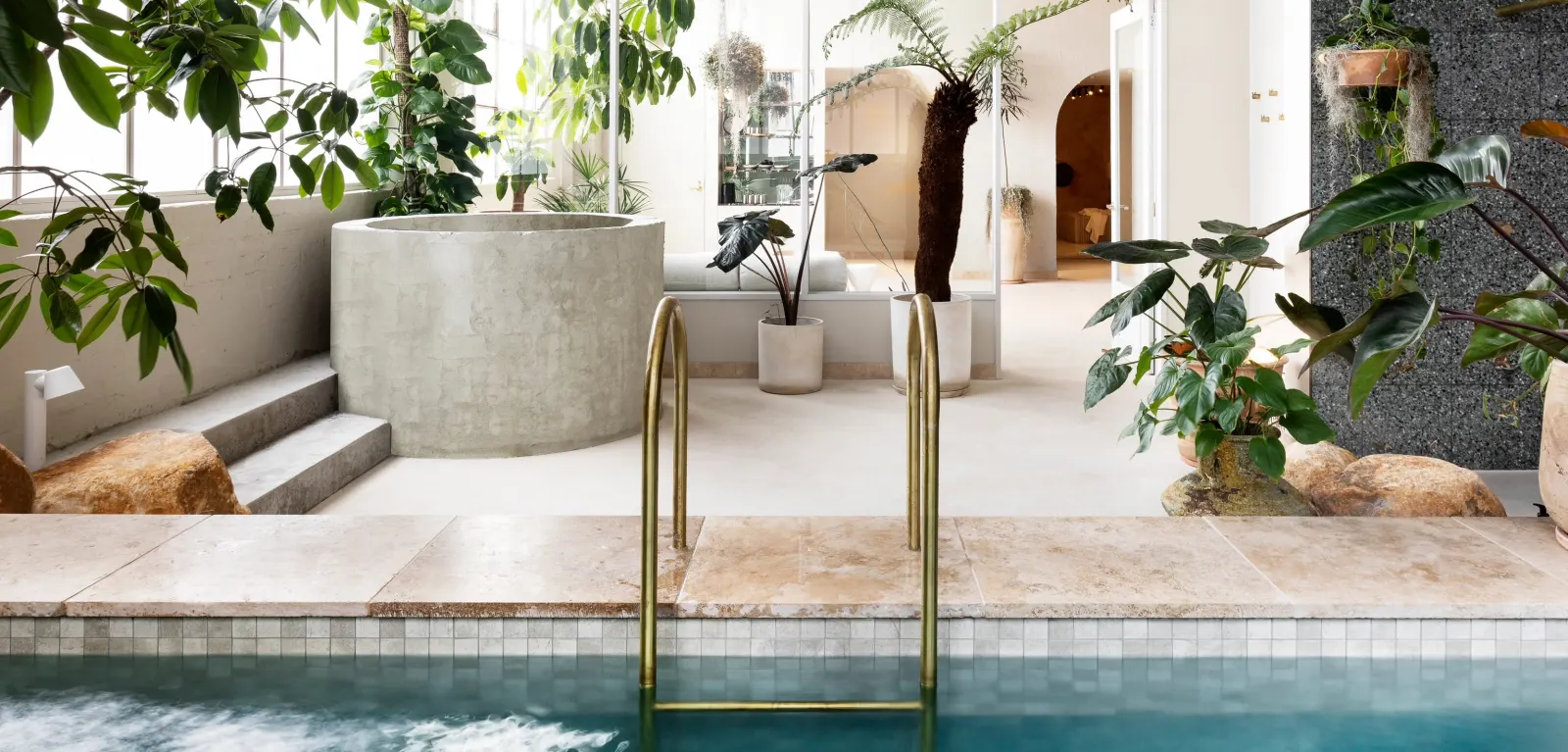

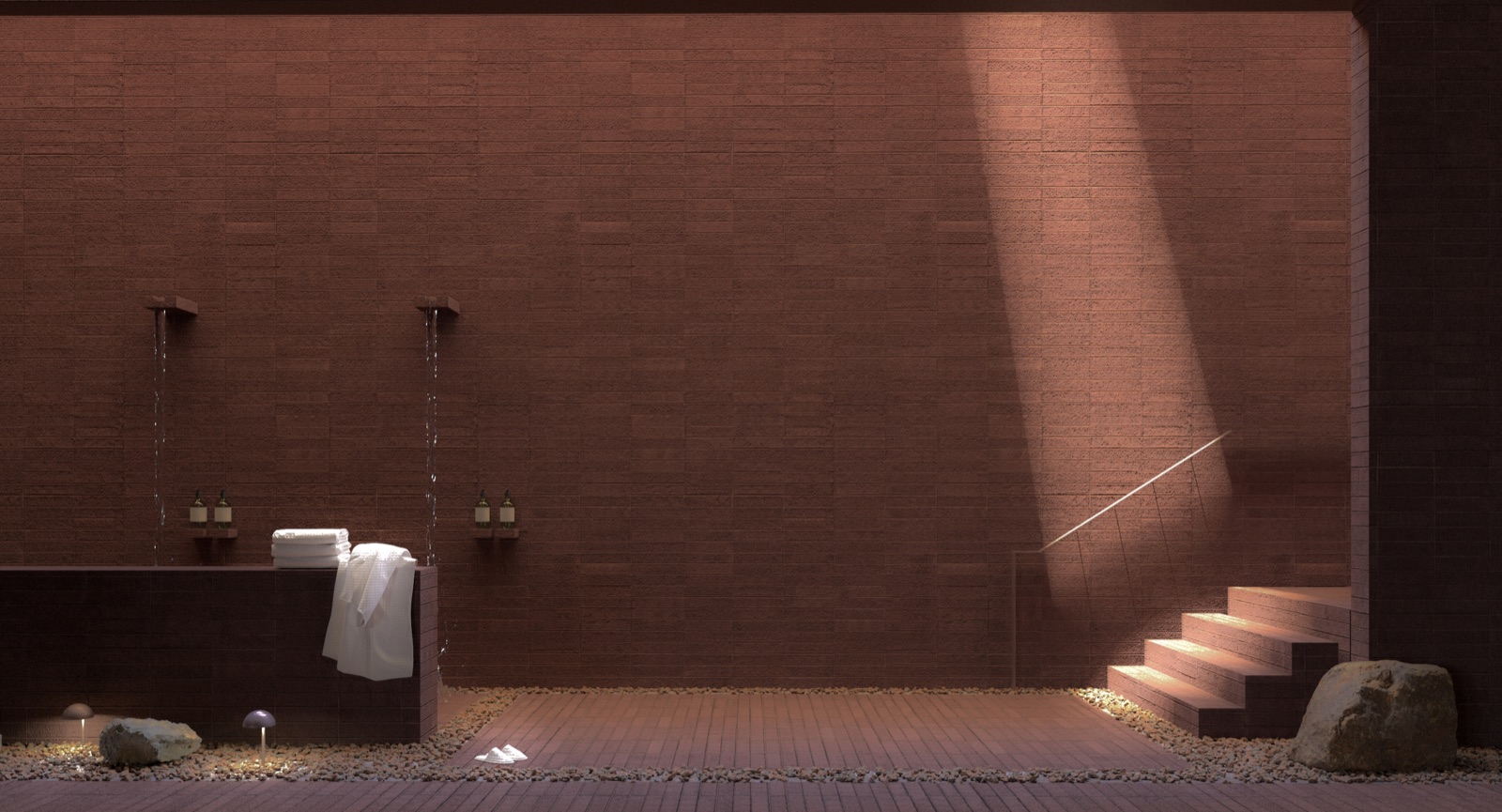
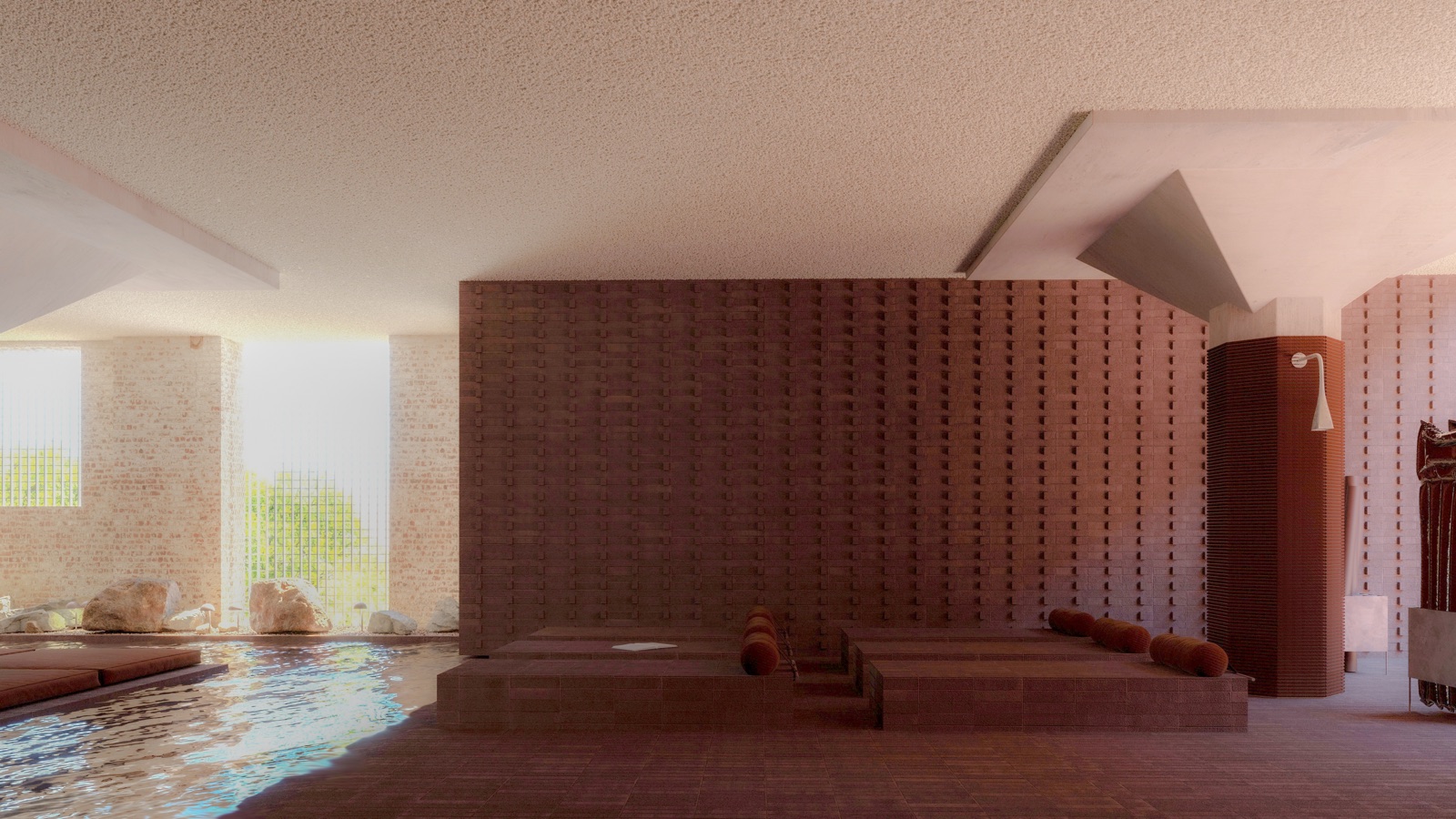
For months, inside a white brick building at 531 South Dowling Street, a bustling team of architects, designers, and implement-ers have been hard at work bringing Sense of Self’s first Sydney location to life. Genuinely jawdropping, an early look inside by NOISE can confirm that SOS has all the signs of a bona fide Sydney institution in the making.
The bathhouse is a follow from SOS’s initial Collingwood location, and founder Freya Berwick and her team have charted a patient four years from finding the perfect site, pulling together designs, to opening the doors to Sydney’s first guests.
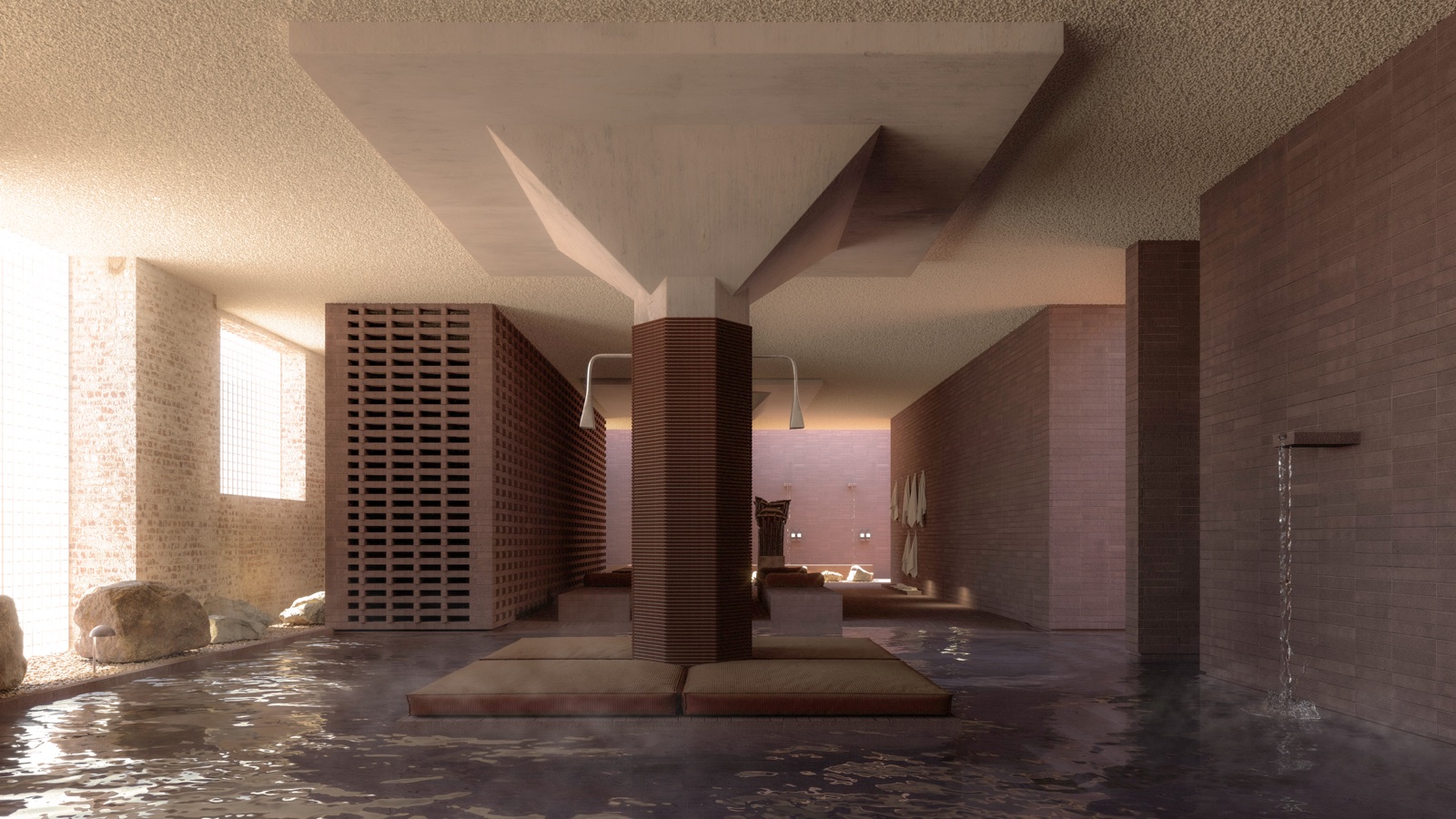
From picking the right tiles to niche engineering details (good below ground airflow is a thing!), Freya and her team’s intention has balanced multiple facets including respecting the building’s rich history and surrounds, whilst pushing Sydneysiders beyond their usual beach comfort zones into an underground pool.
There’s a lot to consider when building a project of this scale: discovery, integrity within the space, and of course for Sydney, parking. The big pool (it’s so big!!) conjures images of friends swimming, if you wander around a different nook, you can imagine two lovers sharing a kiss. There’s an incense holder, a kitchen for snacks, and a chessboard.
Despite the high levels of intentionality behind Sense of Self, from speaking with Freya it’s clear that she’s someone who is deliberately non didactic when it comes to what bathing means to other people. She sees her role as being more to create and steward the space, it’s up to guests what it means to them.
What we try to do is create a sense of ‘luxury’ without the fuss for people. There are so many ways people can find connection and ways back to themselves, but I do think bathing in all its forms, sauna, hammam, hot pools, cold plunges, swimming, is a fast and effective way back to self.
“We say to our staff to protect the experience, it creates another layer of permission and intentionality for people to turn that into ritual and be really present. So yes, Sense of Self has evolved since we first started in that we’ve become more mature, we’ve learned a lot, but the underlying premise is the same, which is to do as much as we can to create the most impactful, restful experience.”
Three years living in Norway set the foundations for Freya’s early personal interests in bathing culture, but the ongoing draw to water goes back to a childhood near the Daintree rainforest. SOS draws on an aesthetic ethic of “urban beauty”, with some of her most potent industry sources of inspiration coming less from spas and more hospitality. The team see themselves as being in the business of service and care.
“Come as you are, take what you need. You need to not put objectives on it. The space needs to be free of outcomes. You need to let it be what it is for people and not impose what you think it needs to be on them,” Freya muses on the theme of thinking about Sense of Self as a modern third space.
For Paul Strasser, the Vice President of The Australian Sauna Association, a work stint in London led to his discovery of the Community Sauna Baths in Hackney.
These baths became his “happy place”, a personal experience that pushed him to want to collaborate with Blue Mountains Sauna co-founders Nikita Miltiadou and Inga Sommerfeld on bringing The Big Sweat to life.
(Btw for those of you thinking something as wholesome as sauna would be fully removed from ideological tensions, nay. Infrared is nahht the same as a Finnish sauna and Inga will 100 per cent share more on how if asked).
That humans have universally arrived at communal bathing as a kind of cultural mainstay is revealing in and of itself. But it’s certainly not the only way folks are finding new ways to gather.
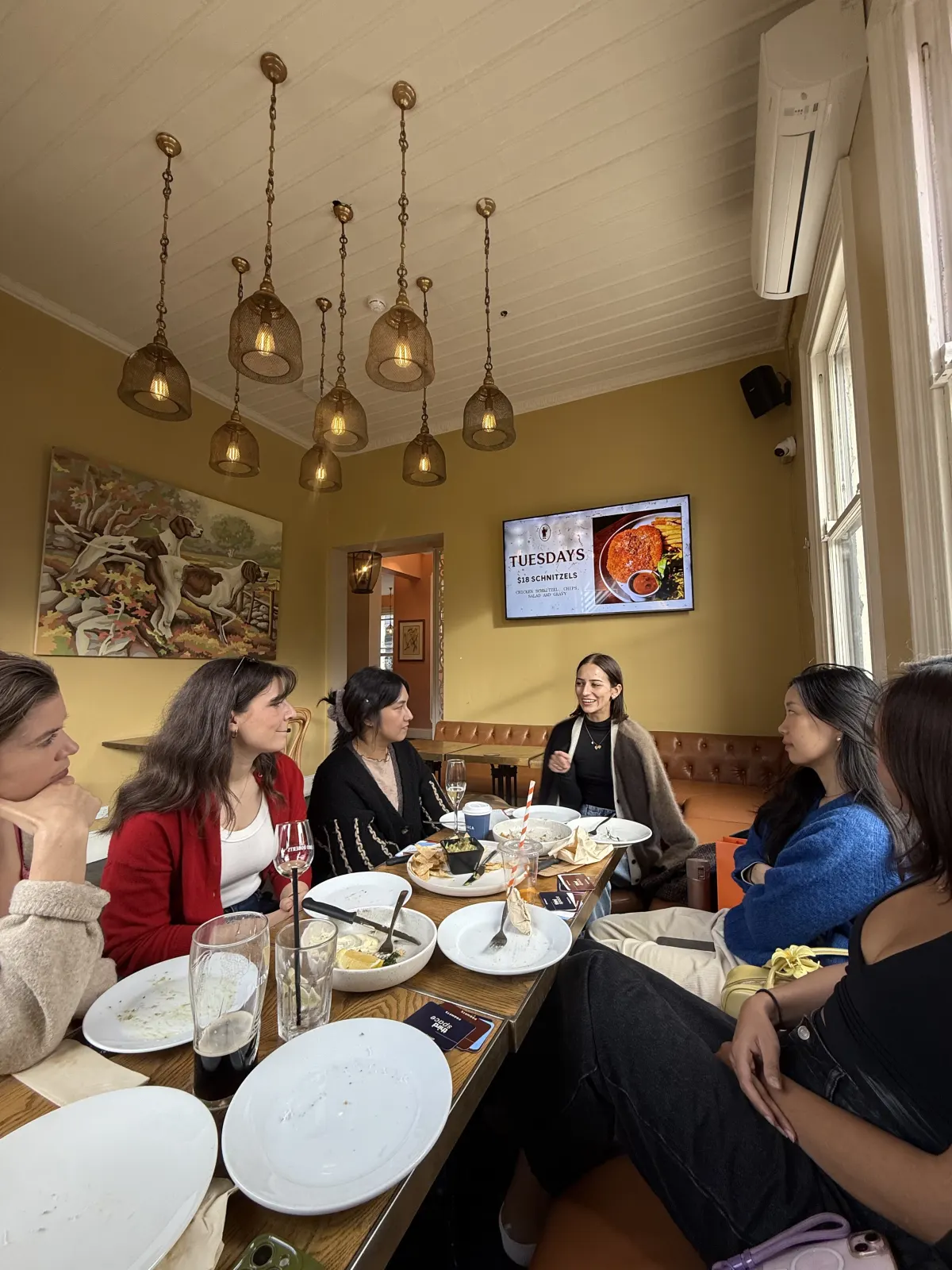

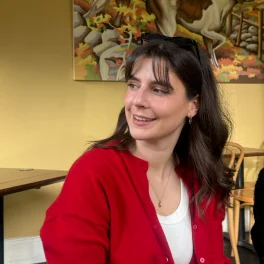
“You know that scene in Disney’s Hercules when his youth is fading away as he’s swimming through the whirlpool of souls? That was how I felt last year; like my lifeforce was being siphoned from me every time I fell into doom scrolling.”
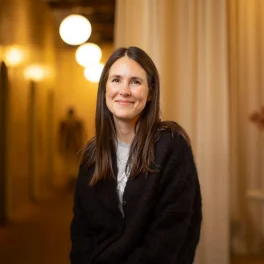
That’s Nicolette Preketes-Tardiani: the founder of Third Space.
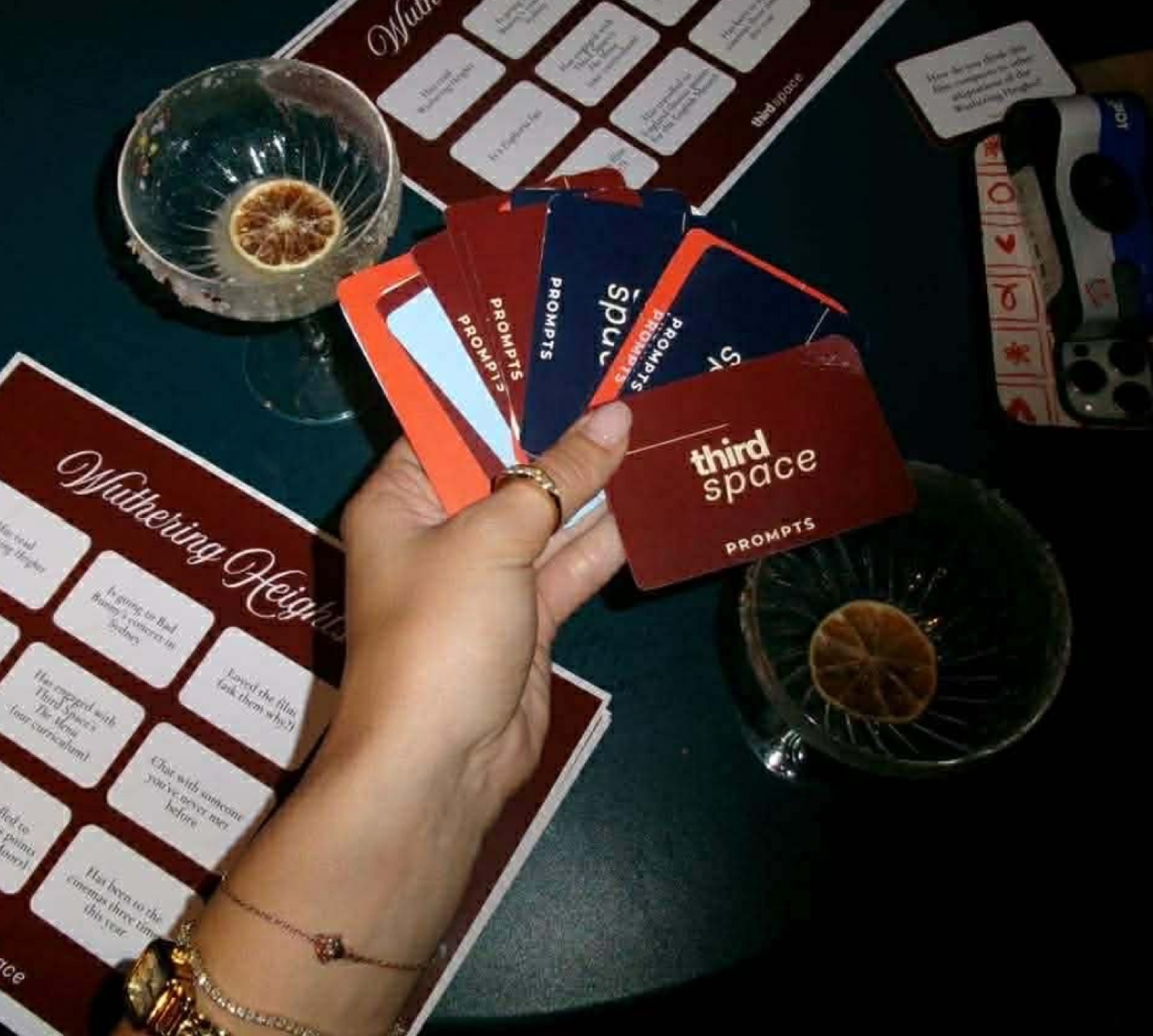
Positioned as Sydney’s cultural salon, a content, education, and events play rolled into one, 29-year-old Nicolette saw multiple trends converging (Gen Z’s desire to go IRL, the risk of AI-related cognitive surrender, and a need to cultivate intellectual space beyond algorithmic reach). She quickly built conviction that a dedicated move into the space was needed.
Diving into the history of third spaces, she found a trove of rich, layered options: the ancient Greek agora, the Chinese teahouses of the Jin Dynasty, the European coffeehouses in the 1600s, the French Salons of the 1700s, to the pre-colonial Majlis of western Asia. (Tag yourselves — I want to be Jin Dynasty teahouse but realistically I’m European coffeehouse). She found marketplaces, cafes, bathhouses, galleries, and seating for conversation, council, and good old-fashioned bonding.
Contrast this with a night in June 2025, when Nicolette and two friends tried to find somewhere to have a post-Materialists debrief outside Dendy’s in Newtown, Sydney, only to be met with frigid winds, a too packed Messina, and literally zero open late-night cafes.
The idea for Third Space was brewing, and this moment confirmed for Nicolette that more modern solutions for ancient needs were needed.
Nicolette describes herself and her husband as the “Type A” organisers of their friend group, so taking that energy into a more structured business was a natural evolution. Their Greek heritage, perhaps, is also not going to let chatting around a table about the meaning of life over wine go gently into that good night simply because Frontier Labs in Silicon Valley invented LLMs. Beyond immediate friends, Third Space attracts an attendee base of Sydney-siders or people new to Sydney. Generally in their 20s and 30s, they’re university educated, working corporate, and highly engaged in the pop culture du jour from the thirsty ice hockey players of Heated Rivalry to Christopher Nolan’s The Odyssey.
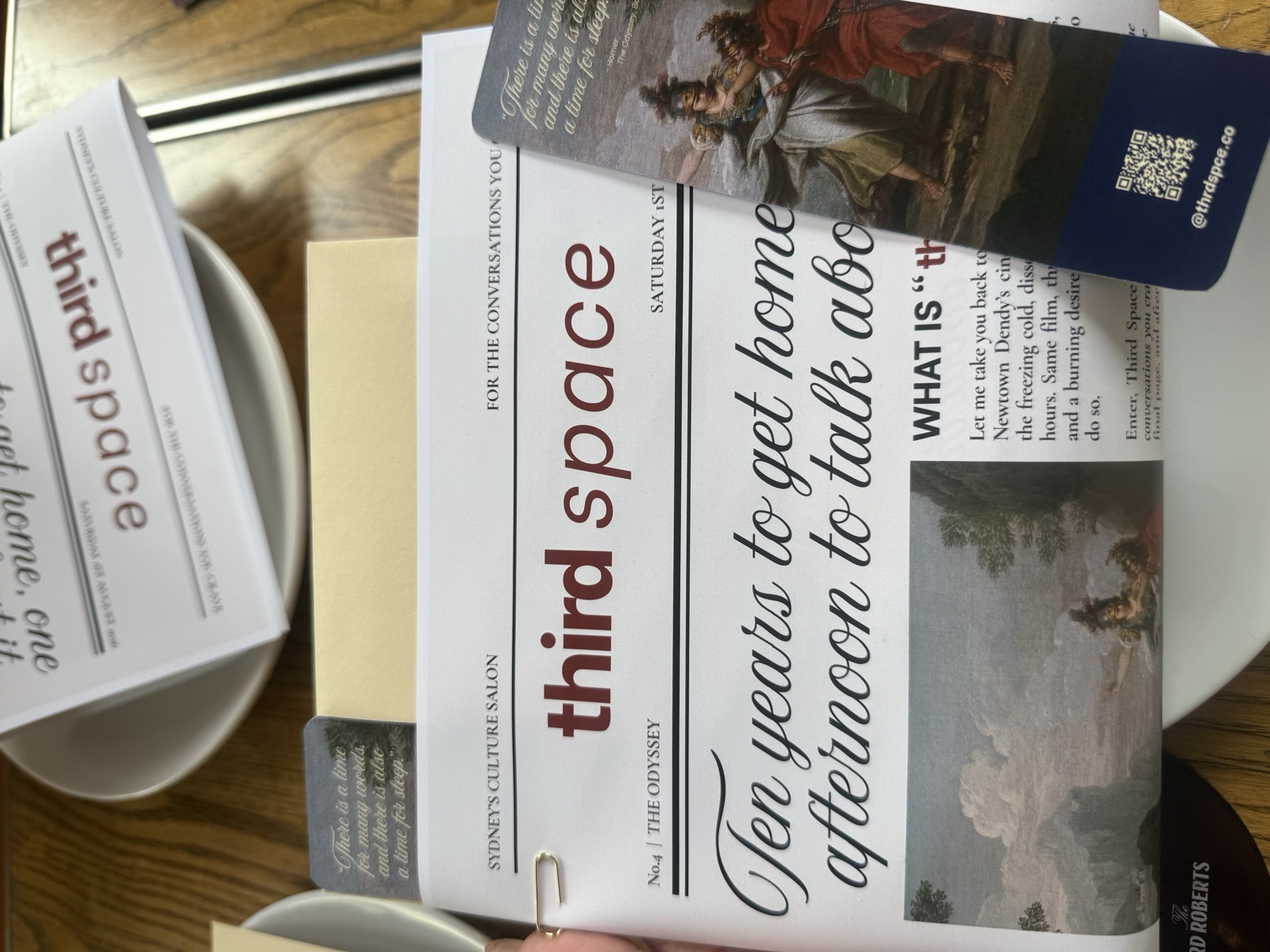
The events aren’t school, but effort is expected. Conversation cards are thoughtfully written, attendees receive a stunning, literal printed newsletter with further reading to take home. Nicolette suspects the rise of AI is leading to a weird counter-trend of anti-intellectualism, hence embedded into Third Space is an invitation for dialoguing and deeper engagement.
“I think people are realising that AI might be quick and easy, and even useful in some instances for learning new skills without a paywall, but it can’t replace human creation. I believe that people are, at the very least, beginning to appreciate what the arts and humanities offer us,” she says.
“People want to push themselves to not only learn more, but to have more meaningful conversations. Listening to people’s opinions on tiktoks and reels is great, but seriously nothing beats intentional conversation.”
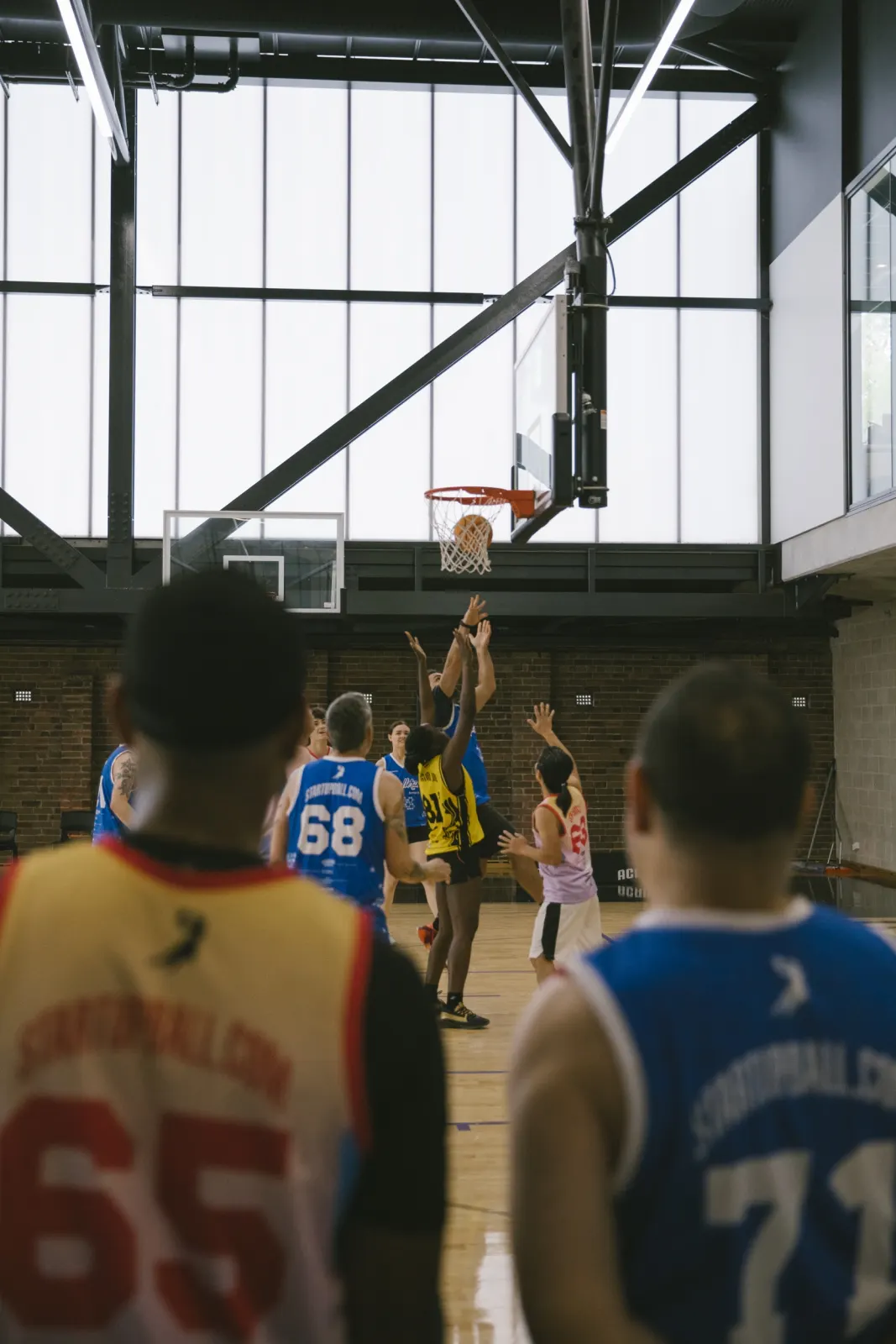

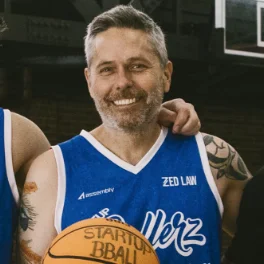
“I’m a Gen X. So we would just call it ‘connection and community’,” Mark Zmarzly explains, when I say NOISE is exploring third spaces. Generational nomenclature notwithstanding, it’s clear chatting with Mark, affectionately known as ‘Z’, that the longing for connection, belonging, and togetherness is universal.
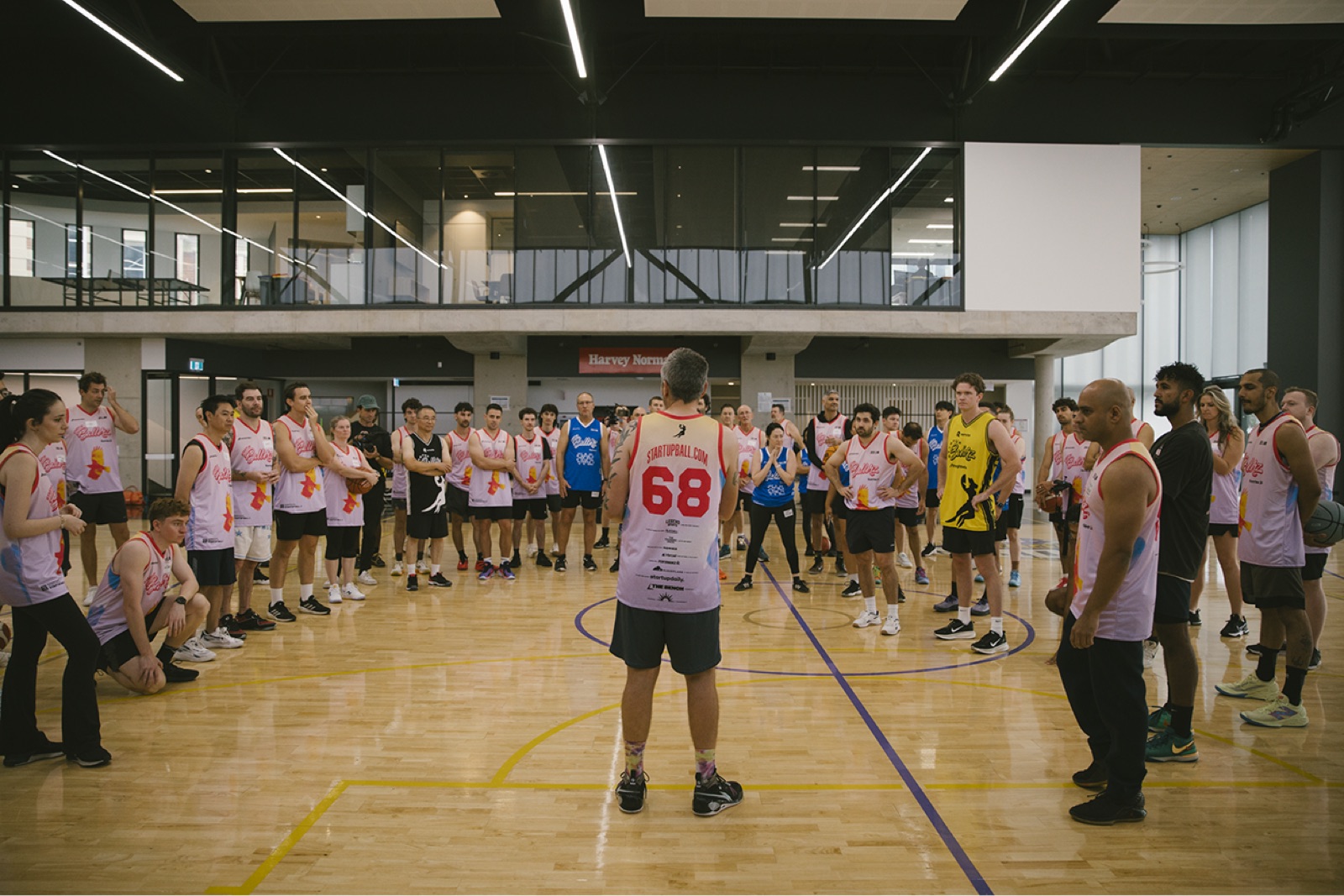
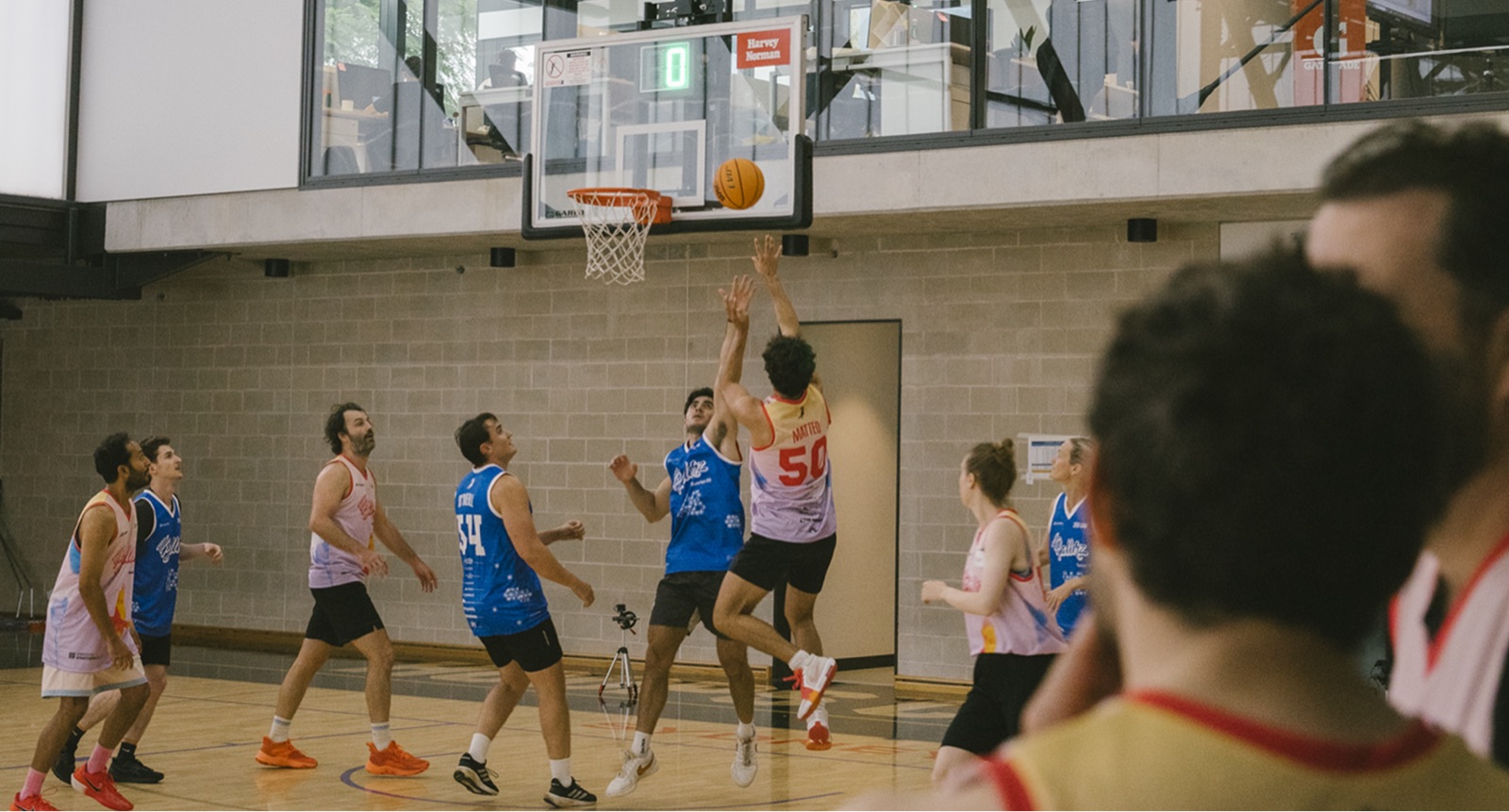
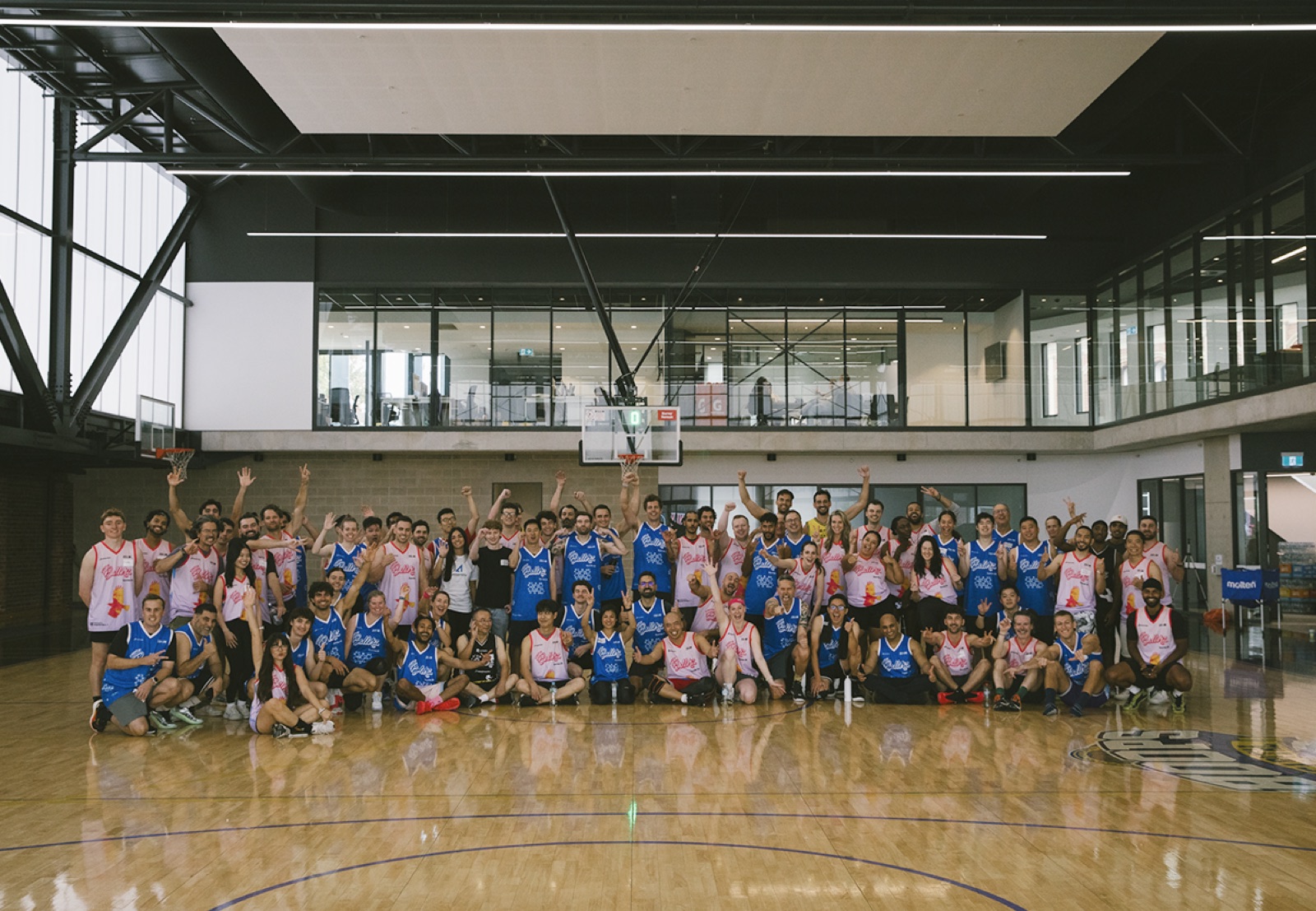
Z is a former founder, angel investor, sales at Morfless, and recent joiner of the venture capital firm EVP. For the purposes of this chat, he’s the instigator of basketball and Padel meetups for the startup community: STARTUP BALL.
“It’s Field of Dreams, right? If you build it, they will come. People are starving for these types of connections and anything you’re interested in, other people will be interested in as well. So why not build it, and create the thing you want to exist in the world? That’s what founder DNA is all about,” he says.
All skill levels are welcome, it’s $6 to $9 a game, and the focus is as much on connection as competition. Now Z says that, but these are businesspeople like former Zambrero CEO Stuart Cook on a court. Not hippies conducting a cacao ceremony over tarot. Surely things get intense?
You see how people work within a team, you see the selflessness of how people pass the ball, or who wants the ball when it comes down to the last seconds of a tight game. Maxine Minter from Co Ventures will dive for a loose ball and wrestle it from somebody. A person with that kind of tenacity is someone I want to see on my cap table.
Pragmatically, running games meant Z could scale his time more effectively than coffee catchups, getting to know more folks in one hit. And this whole person view is important to him, who seems particularly motivated by the human, authentic side of business. During our call, Mark’s emotions stir as he recalls one particularly fun day on the court.
“Sorry,” he says. “It’s just become such an amazing part of our lives.”
No need to apologise. It’s nice to see a man cry!
With a successful pattern across Sydney, Melbourne, and the Gold Coast in motion, Z sees potential to take Startup Ball to more major global cities. The more entrepreneurs releasing endorphins on the court, the better.
Freya Berwick avoids lecturing on all things sauna culture and wellness, but we’re less restrained.
And so we’ll end on this note: The tech world regularly tries to march us towards a particular version of progress. It behooves us to thus ask, at regular intervals, what future we are working towards at any given time. A world where bathhouse chess, pub discourse, and shooting hoops forms as much part of the cultural muscle memory as Cursor and Notion AI coding agents?