









It’s February 3rd, 2008 and the largest sporting game in America is happening.
The Superbowl.
On this fateful Arizona night, the New York Giants were going up against the New England Patriots led by the GOAT of American Football, primetime Tom Brady. He was coming off a record-setting MVP season, and entering the game with an undefeated 18-0 playoff record.
New York didn’t stand a chance.
As halftime neared, New York were trailing 7-3 and it felt like only a matter of time until Brady’s offense started ripping them to shreds. As they huddled up for the next snap, the defense lined up the same way they had all game.
snap The ball flies to Brady and one NY Giant, Kawika Mitchell, breaks formation, charges through the line, and drives Tom Brady into the ground, forcing them to lose 7 yards and toppling the Patriot’s confidence.
The play they executed was called a Blitz. It’s a high-risk defensive strategy that hedges your bets on tackling the quarterback, even if it means leaving other players open. And in this case, the risk paid off.
What started with one blitz led to one of the biggest upsets in NFL history: the NY Giants defied the odds and won the superbowl… with defense.
In the world of Clutch Glue, Lucy Hay is running a blitz.
Before we dive in, let’s lay down some context for the uninitiated.

Clutch is run by Lucy and her sister Annabel. It all started when Annabel had a wardrobe malfunction on the sweaty df at Chinese Laundry (a thumping, dark, edm club in Sydney). When fashion tape just couldn’t do the job to fix it, she thought “If only I could glue myself into my clothes”. Fast forward 4 years of R&D with a science guy called Raymond, a stint of work in Hong Kong for Annabel, Lucy moonlighting as a glue mule, a Blackbird-led funding round; and you’ve got Clutch Glue.
I met up with Lucy for brekky at Park St Diner in Sydney’s CBD. It was the middle of May and things were starting to get cold. As I spied her walking in the door from my corner table, I saw we were both wearing the traditional creative’s winter uniform: all black everything.
We ordered food and settled in. Lucy eyed the banana bread pretzel on the menu. “That’s a hectic way to start a Wednesday morning.” A soda-bread scone was ordered instead.
Despite this being only my second time meeting Lucy, she felt like an old friend. It seemed obvious that she knew how to do both playful and serious exceptionally well.
What I’m curious about, though, is where that comes from and if she notices it too.
Coffees hit the deck, and we jumped right in.

Haz: “I saw you were in the battle of the bands for your college.”

Lucy: “Yes. How did you find that?”
Haz: “And you played Chocolate by the 1975.”
Lucy: “Yes”
Haz: “And Are you gonna be my girl? by Jet.”
Lucy: “And I can’t feel my face by The Weeknd...”
Lucy: “How did you find this?”
Before our interview, I did some digging to understand who Lucy Hay is. After getting past the Clutch-era articles and references to a 17th century English courtier, I struck gold in the form of an unpublished editor’s markup of Verity, the magazine for Lucy’s college at the University of Melbourne.
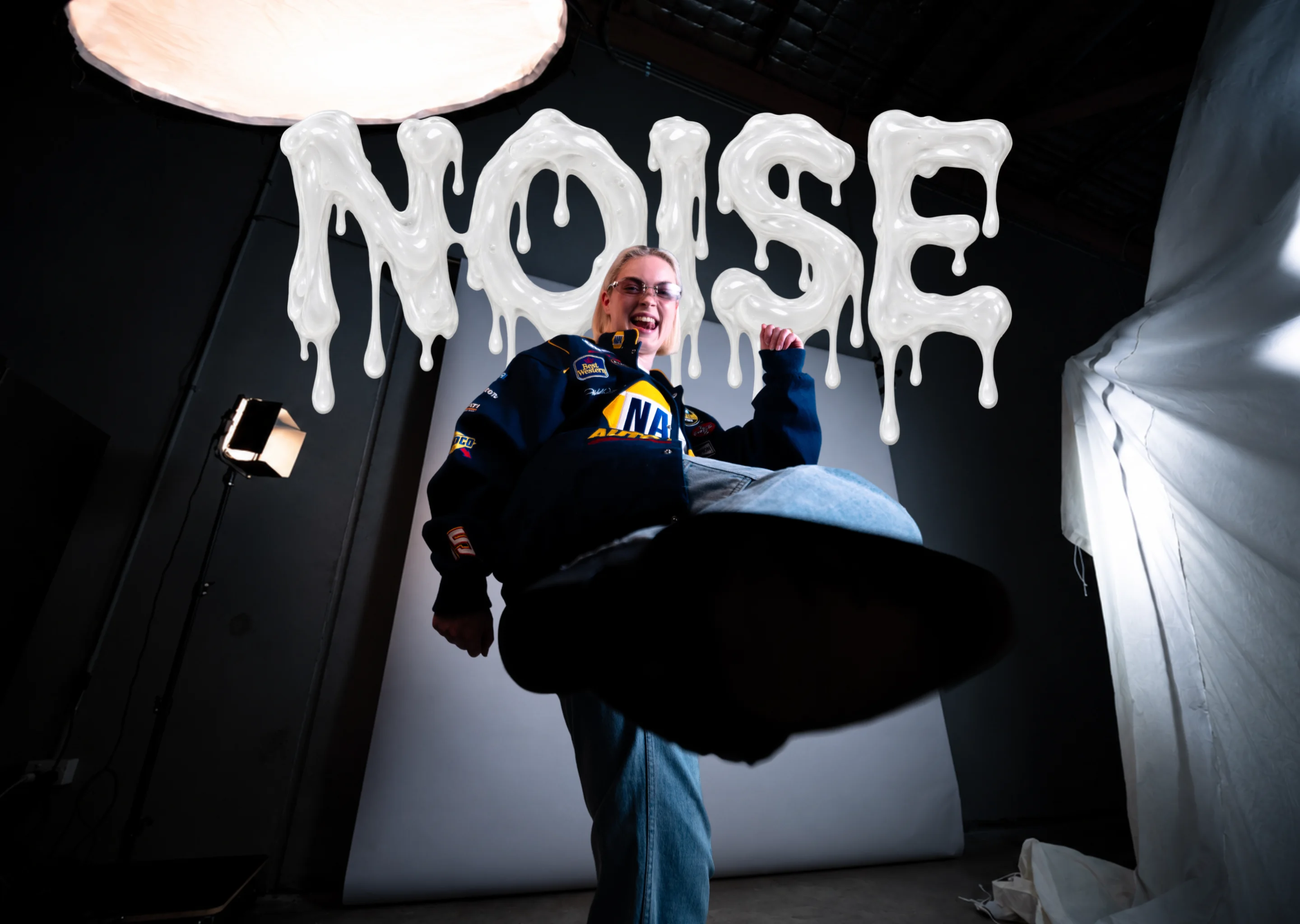
On the second page was a photo of Lucy appearing as the lead singer for a band called Jagger’s Lane.
“This was just a group of us who all went to college together. I think the boys used to jam a little bit together and then they were like “We’re thinking of performing at this college thing. But we need a singer. Would you want to do it?” And I was like, scary, but yes, I’ll do it. And from then we just would jam together sometimes.”
Eventually her passion for music would lead her to her first brush with social media: a Snapchat channel where she’d reach out to venues and ask if she could film gigs and promote local artists.
And when it came time to think about jobs and her career, it seems like her connection to the arts is ultimately what drew her to adland.
“I didn’t know what I wanted to do but I managed to get an internship at Clemenger. And I was like, I love this environment. It’s creative. 9 to 5 solid salary. I get to be an artist without being an artist. And I fell in love with brand and what brands can do.”
This “what brands can do” is what sits at the centre of Lucy’s belief system.
“They [brands] have a lot of control over the market and people’s perceptions of things. Ads are consumed by so many people and there’s a lot of responsibility for showing equality, inclusivity, all of that sort of stuff. But I remember watching something with the CMO of Libra … and she said, “as a person in media, we have a responsibility to reflect what society is like. People look to us to understand who people are.”
Though she was a staunch follower of this philosophy, her work in advertising firms showed that this wasn’t always the case for brands.
“I’d get all these briefs from clients being like, “It’s International Women’s Day, we want to highlight this about our business.” And as I delved into it a bit deeper, I was like, oh my God, hold on. You actually don’t uphold any of these things. This is all virtue signalling.”
From countless moments like this, there was a fire lit inside Lucy that has manifested itself into the way Clutch speaks to women and dispels feelings of shame in the fashion and cosmetics industry.
“I’ve realised for our brand, I’m the one who gets the word. I get to be like, no, we care about this. I’m not going to change that language or we don’t talk about the brand like that because XYZ.”
“I still firmly believe you have an opportunity to truly stand for something.”
Since Clutch started, Annabel and Lucy have been two sides of the same coin. Annabel leads the charge on pitching the company (including their famous Shark Tank debut) and getting their products in front of retailers and investors. Lucy is often behind the scenes architecting how the Clutch brand shows up and, perhaps more importantly, who Clutch shows up for.
When I asked Lucy about their seemingly fearless approach to building a brand she said, “I would definitely describe Annabel as fearless. I wouldn’t describe myself as fearless, really… But in saying that it depends what you’re applying fearless to. I am definitely firm on what values I want the brand to uphold.”
If Annabel is Clutch’s quarterback, Lucy is their defensive line. She holds their moral lines firm, she reads their audience superbly, and when she sees an opportunity to gain ground in unexpected places, she runs the blitz to perfection: landing a billboard in Times Square, running outfit repairs at the Taylor Swift concert, or dressing up as a giant glue bottle for the Sydney Marathon.
As Clutch grows and gains new stakeholders like big chains, new investors, and customers in new markets, I wondered if Lucy had to change how she “held the line” per se.
“I definitely feel a lot of pressure and fear around making the right decision. But I find when I get into that headspace, I just need to remind myself that I wouldn’t be making these decisions if people didn’t trust that I could make these decisions.“
But the blitz, or in this case pulling a brand stunt, is still a high-risk move. If it misfires, you’ve got no safety net to prevent a touchdown. So how does Lucy pick when to run it?
Though Lucy is a firm believer that “If you advertise to everyone, you advertise to no one”, she doesn’t think of that as a license to create shock value for the sake of it.
“I don’t like how much shame there is around women, their clothes, their bodies. The way that fashion tape’s normally talked about is like “don’t let anyone see your disgusting body”. Like Britney Spears coming out of the car and flashing all the cameras. It was very much in this layer of shame.“
In a world where marketers (and particularly marketers at tech companies cough Novig cough) are ok with generating eyeballs by any means necessary, Lucy believes that if Clutch doesn’t possess a moral backbone, then it isn’t doing its job.
“Using Clutch isn’t about concealing yourself from the world, it’s about enabling further self expression through fashion. And I think that was like a really important distinction I wanted to make with the product.”
In practice that means being present at women-focused events like Nike’s After Dark series, posting “some pretty red-hot stuff on social” like replying to hate comments from men, and avoiding the familiar traps of female-focused branding – the “light pink bottle, pretty white text, a little icon of a girl in a dress” look.
In her words, “I just think it’s lazy. I have found a lot of advertising to women to be lazy and so I wanted that to not be a thing for us.”
For this defender, hard work isn’t optional. When there’s an opportunity to surprise and delight (like a DJ on a bike) that makes sense for their people and their message, Lucy runs the blitz and tackles the quarterback.
Clutch is now expanding across the world and, with that, comes a series of big questions. Do they stay HQ’d in Aus or head to the US? Can the Hay sister telepathy cross the Pacific? Should it be mandatory for new hires to be fans of musical theatre?
But it seems that despite global sales skyrocketing, with Annabel now based in New York and Clutch being stocked in CVS stores around the country, Australia will still be Clutch’s home for the foreseeable future.
“I’m not moving to America. I will stay here and all of our staff will always be based in Australia”.
While right now there is a loud ruckus about the struggles of building a company in Australia, Lucy is confident that they have what it takes.
“We have great talent here, people who work really hard, people who are honest, all round good humans. And that’s all you can really ask for… There is some Australian essence to the Clutch brand.”
So what’s next for Lucy and Clutch? Well, they sure aren’t resting on their laurels.
“Fashion tape isn’t the only problem in the wardrobe solution space. There are so many other problematic products that need to be rethought and who better to do it than us.”
I couldn’t agree more.
With her quarterback leading the charge in the US, Lucy is holding the line in Australia, reading the plays, and getting ready to pull off a game-winning blitz.